

Scalp psoriasis vs. dandruff How to tell the difference?
Confusing scalp psoriasis with dandruff or seborrhoeic dermatitis is very common because these conditions share symptoms such as flaking, itching, and visible scales. However, they have different underlying causes and require different approaches to care. Understanding the key differences can help you choose appropriate products, recognise when professional advice is needed, and avoid unnecessary trial and error.
Scalp psoriasis vs. dandruff: the short answer
|
Dandruff & Seborrhoeic Dermatitis
|
Scalp Psoriasis
|
|
|---|---|---|
|
Scale appearance
|
Greasy, yellowish or white scales
|
Dry, thick, silvery-white scales
|
|
Plaque borders
|
Poorly defined
|
Sharply demarcated
|
|
Common location
|
Scalp, eyebrows, sides of the nose, ears, chest, back
|
Outside of elbow and knees, scalp, lower back; can be generalized
|
|
Itch
|
Mild to moderate
|
Variable; can be severe
|
|
Triggers
|
Stress, cold weather, illness, neurological disease
|
Stress, infection, trauma (Koebner phenomenon), certain drugs
|
|
Response to anti-fungal shampoos
|
Good
|
Poor or none
|
|
Nail changes
|
None
|
Nail pitting, lifting, deformation, discoloration
|
These signs can help you understand the differences, but they cannot confirm a diagnosis. If you are unsure, speak to a healthcare professional.
What we usually call "dandruff" — and why it's often seborrhoeic dermatitis
Dandruff is a common scalp condition that causes white or yellow flakes and sometimes mild itching. It is not contagious or dangerous, but it can be persistent and bothersome. Seborrhoeic dermatitis is a related chronic inflammatory condition that affects oil-rich areas of the body, particularly the scalp, face, and upper chest. It can cause redness, irritation, and greasy scales in addition to flaking.
Is dandruff seborrhoeic dermatitis?
Yes, according to the comprehensive review on seborrhoeic dermatitis and dandruff, dandruff is generally considered the mildest form of seborrhoeic dermatitis. Both conditions are associated with an inflammatory response involving Malassezia yeasts that naturally live on the skin, together with excess sebum production. The main difference is severity: dandruff mainly causes flaking and affects only the scalp, while seborrhoeic dermatitis typically produces more noticeable inflammation and irritation and also affects other parts of the body.
What is scalp psoriasis?
Scalp psoriasis, according to the American Academy of Dermatology, is a chronic autoimmune condition in which the immune system triggers excessive skin cell production. As a result, skin cells accumulate much faster than normal and form raised plaques covered with thick silvery-white scales. Symptoms may include itching, burning, tenderness, cracking, and occasional bleeding.
Although scalp psoriasis and seborrhoeic dermatitis can look similar, psoriasis usually creates more clearly defined plaques and may extend beyond the hairline onto the forehead, neck or around the ears. Read more about scalp psoriasis.
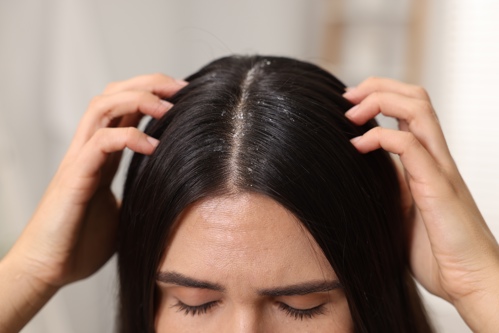
Dandruff and seborrhoeic dermatitis vs. scalp psoriasis: Key differences in detail
Appearance of the flakes
One of the easiest ways to distinguish the two conditions is by looking at the flakes. Seborrhoeic dermatitis usually causes loose, greasy scales that are white or yellowish in colour. These flakes often appear oily and may stick to the hair and scalp. Scalp psoriasis, in contrast, typically produces thicker, drier scales with a characteristic silvery-white appearance. The scales tend to build up over time and may form dense plaques that are more difficult to remove.
The skin underneath
The appearance of the skin beneath the scales can provide another important clue. In seborrhoeic dermatitis, the affected skin is usually mildly red or pink, and the borders of the affected area are often poorly defined. With psoriasis, the plaques are typically raised, inflamed and clearly separated from surrounding skin. The sharp borders are often one of the most distinctive diagnostic features.
Itch and discomfort
Both conditions can cause itching, but the severity often differs. Seborrhoeic dermatitis generally causes mild to moderate itching and irritation. In scalp psoriasis, itching may range from mild to severe and can interfere with sleep or daily activities. Some people also experience burning sensations, tenderness, skin cracking and occasional bleeding.
Where it appears on the body
Seborrhoeic dermatitis primarily affects areas rich in oil-producing glands. Besides the scalp, it often appears around the eyebrows, sides of the nose, ears, beard area and upper chest. Psoriasis can affect the scalp as well, but it commonly occurs on other body sites, including the elbows, knees, lower back, hands, feet and nails.
Triggers and pattern of flare-ups
Both conditions tend to fluctuate over time, with periods of improvement and worsening. Stress, illness and cold weather can aggravate either condition. However, psoriasis is also associated with additional triggers such as skin injuries, infections and certain medications. Some people develop psoriasis lesions in areas where the skin has been injured, a reaction known as the Koebner phenomenon.
The underlying cause
Although the symptoms may appear similar, the underlying mechanisms are very different. Seborrhoeic dermatitis is linked to excess sebum production and an inflammatory reaction involving Malassezia yeasts. Psoriasis is an immune-mediated disease driven by chronic inflammation and accelerated skin cell turnover.
Response to anti-fungal shampoo
Response to treatment can also help distinguish the conditions. Anti-fungal shampoos containing ingredients such as ketoconazole often improve dandruff and seborrhoeic dermatitis. In scalp psoriasis, anti-fungal shampoos generally provide little benefit beyond helping remove some scales. Persistent symptoms despite appropriate anti-fungal treatment may suggest psoriasis rather than dandruff.
Could it be something else?
Although dandruff, seborrhoeic dermatitis and scalp psoriasis are among the most common causes of scalp flaking and itching, they are not the only possibilities. Other conditions, including atopic eczema and contact dermatitis, can produce similar symptoms.
Because many scalp conditions share similar features, self-diagnosis is not always straightforward. If symptoms are severe, unusual, recurrent or fail to improve, a dermatologist can help establish the correct diagnosis and recommend the most suitable treatment.
What kind of care helps for dandruff and scalp psoriasis?
The most important step is identifying the cause of your symptoms. Dandruff, seborrhoeic dermatitis and scalp psoriasis require different approaches to care. Using products designed for the wrong condition may provide little benefit and delay effective management.
What products help with dandruff and seborrhoeic dermatitis on the scalp?
Because dandruff and seborrhoeic dermatitis are associated with Malassezia yeasts and inflammation, care usually focuses on reducing yeast overgrowth and controlling symptoms. Anti-fungal shampoos containing ketoconazole are often effective at reducing flaking, itching and redness. Nizoral® 2% Medicated Shampoo is one example designed to help manage dandruff and seborrhoeic dermatitis by targeting one of the key factors involved in these conditions.
How to care for psoriasis-prone scalp?
Scalp psoriasis often requires medical treatment, especially when symptoms are moderate to severe. Alongside prescribed therapies, many people benefit from a gentle scalp-care routine aimed at reducing scale build-up and supporting scalp comfort.
Well-selected cosmetic products formulated for a psoriasis-prone scalp suitably complement medical treatment and support scalp comfort between flare-ups, which is crucial for psoriasis management. Unlike generic scalp psoriasis shampoos, Nizoral® Care Kerato-PSO Shampoo contains 2% encapsulated salicylic acid, which effectively removes scales and is released gradually, providing long-lasting relief.
Moreover, the formula contains ingredients selected to moisturise and soothe the scalp while supporting the skin barrier and the scalp's natural microbiome. It provides a 76% visible reduction in scalp scale thickness after 4 weeks[1] and 24-hour itch relief[2].
Red flags: When to see a dermatologist?
Dandruff and mild seborrhoeic dermatitis can often be managed at home, but scalp psoriasis usually benefits from professional evaluation and proper treatment. Consider consulting a dermatologist if:
- You have a family history of psoriasis. Psoriasis has a strong genetic component, and having one or more close relatives with the condition significantly increases your risk of developing it.
- You notice nail changes such as pitting, thickening, lifting or discolouration.
- You experience joint pain or morning stiffness, which may indicate psoriatic arthritis.
- Symptoms fail to improve after 2–4 weeks of appropriate self-care or continue to worsen.
Frequently asked questions
Sources
- Seborrheic Dermatitis and Dandruff: A Comprehensive Review (Journal of Clinical and Investigative Dermatology)
- National Psoriasis Foundation: Scalp Psoriasis
- Scalp Psoriasis: A Literature Review of Effective Therapies and Updated Recommendations for Practical Management (Dermatology and Therapy)
- American Academy of Dermatology: Psoriasis
- The National Health Service (NHS): Psoriasis
